
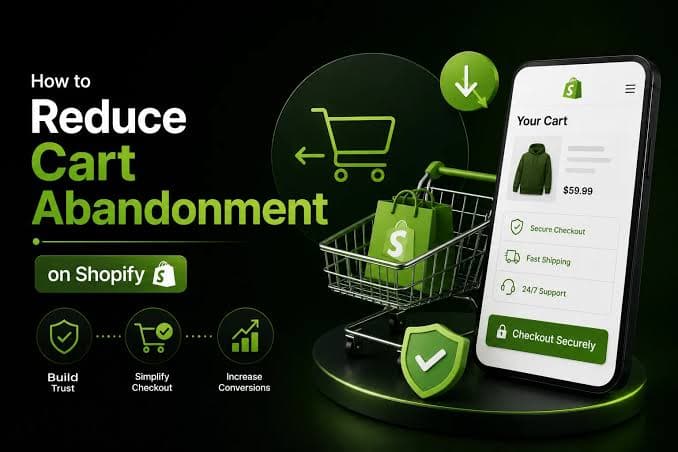
How to Reduce Mobile Cart Abandonment on Shopify
Reducing mobile cart abandonment on Shopify starts with understanding how large the problem actually is: cart abandonment runs around 85 percent on mobile web, compared to roughly 20 percent inside apps (Barilliance; Venn Apps). That 65-point gap is the single biggest lever most stores have available, larger than most individual checkout tweaks could realistically close on their own.
Why mobile abandonment runs so high
A few things compound on mobile specifically. Checkout forms designed for a full keyboard become tedious on a phone keyboard, particularly for address and card fields. Page load times matter more on mobile, where network conditions vary more than on desktop wifi. And browser tabs are easy to lose, a notification, a text message, or simply switching apps pulls attention away mid-checkout, and the tab doesn't always get reopened.
None of this reflects a lack of purchase intent. A customer who added something to cart was ready to buy. The abandonment happens because something in the process added enough friction, or enough opportunity to get distracted, that the purchase never completed.
Checkout-level fixes
Reducing the number of form fields, enabling autofill properly, and offering saved payment methods for returning customers all reduce the physical friction of typing on a small screen. Guest checkout, without forcing account creation first, removes another common drop-off point. Page speed on the checkout flow specifically matters more than general site speed, since it's the step closest to a completed sale.
These fixes typically close some of the gap, but not most of it, since they're working within the constraints of a mobile browser rather than removing those constraints.
The bigger lever: moving off the mobile browser
The 20 percent in-app abandonment figure isn't achieved through checkout tweaks alone, it comes from removing the browser tab problem entirely. A native app keeps the customer in a persistent environment rather than a tab that can get lost or closed. Saved payment methods and addresses carry over automatically. And push notifications, running 20 to 26 percent open rates against 15 to 20 percent for email, can recover an abandoned cart directly, a notification triggered by the abandonment itself, sent to a channel with a much higher chance of being seen than an abandoned cart email.
Native apps convert about 130 percent higher than mobile web overall (Venn Apps, 2025), a figure that reflects this combination: fewer opportunities to abandon, plus a direct recovery channel when abandonment does happen.
A realistic sequence
For most stores, the fastest wins come from checkout-level fixes first, since they're faster to implement and improve the baseline regardless of what comes next. A native app or PWA is the larger structural fix, one that changes the environment the checkout happens in rather than just the checkout itself. Doing both in sequence, rather than treating them as competing options, tends to produce the largest combined improvement.
Bonsify is a Shopify services company by FetchSky that builds native iOS and Android apps, PWAs, new Shopify stores, platform migrations, custom apps, and more, and the free audit assesses which fixes matter most for a specific store's actual abandonment data before recommending a sequence.
Ready to see what's actually costing your store mobile conversions? Start your free audit →
Smaller keyboards, easier tab-switching, and more variable page load conditions all add friction that's less present on desktop, even for customers with genuine purchase intent.
Checkout-level fixes, fewer form fields, autofill, saved payment methods, guest checkout, produce faster wins, while a native app or PWA addresses the underlying environment more structurally.
Yes, abandoned checkout notifications sent through push run at higher open rates, 20 to 26 percent, than the equivalent email recovery flow.
In-app abandonment runs around 20 percent versus roughly 85 percent on mobile web (Barilliance; Venn Apps), a substantial gap.
Checkout fixes are typically faster to implement and worth doing regardless, while an app addresses the larger structural gap; doing both in sequence tends to produce the best combined result.
A free audit reviews the store's actual abandonment data and recommends a sequence based on where the biggest losses are happening.
See what going native would change
Tell us about your Shopify store. We'll give you a straight answer.
Book a free audit