
Add to Home Screen: How PWAs Turn Browsers Into Repeat Buyers
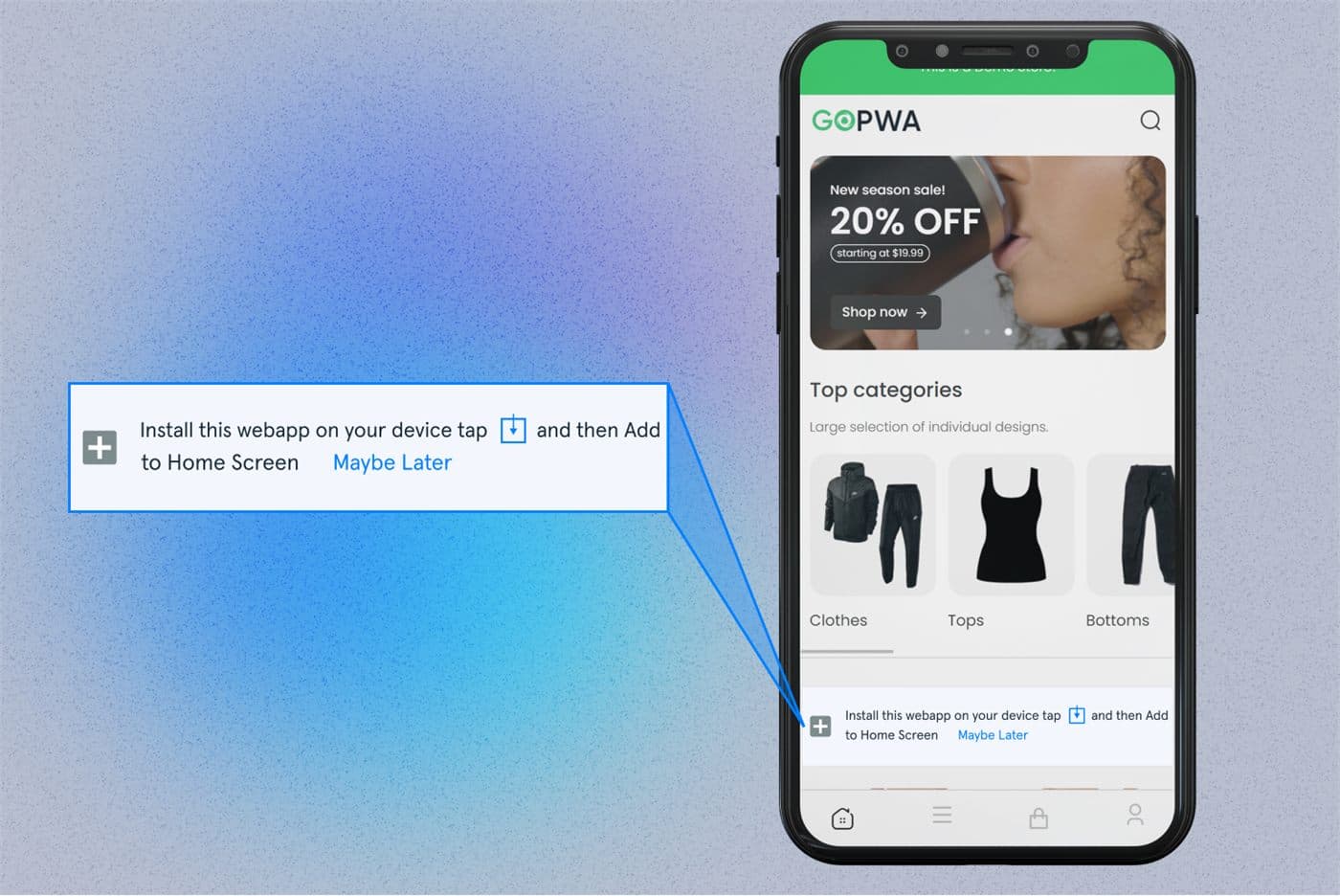
Add to home screen is the install mechanism behind a PWA, a single tap that puts a Shopify store's icon on a customer's phone without an App Store download or account creation. It's a small piece of friction removed at exactly the moment a customer is already engaged, and it's the mechanism behind why PWAs can turn one-time mobile browsers into repeat buyers.
Why the moment matters
Most customers who visit a mobile site once and leave never come back through direct navigation, they wait for an email, a search, or a paid ad to bring them back, all of which cost more per return visit than a home screen icon does. Add to home screen captures a customer while they're already on the site, converting a browsing session into a standing point of return, without asking for a download commitment the way a native app does.
Cart abandonment runs around 85 percent on mobile web versus roughly 20 percent inside apps (Barilliance; Venn Apps), and a chunk of that gap comes down to exactly this kind of return friction. A customer who has to search for the store again next time is far more likely to abandon than one who taps an icon already sitting on their home screen.
The install-to-purchase gap most PWAs never close
Getting the add to home screen tap is only half the mechanism. Most PWA install prompts across the industry stop there, tracking that an install happened but not whether it led to anything. Dockify, Bonsify's own Shopify App Store product, is built specifically to close that gap: it prompts the install, rewards it with a discount code, and tracks install-to-purchase attribution from that point forward, giving a store an actual revenue number tied to the install rather than an install count sitting disconnected from sales data.
What makes an add-to-home-screen prompt actually convert
A prompt that interrupts a customer immediately on page load tends to get dismissed reflexively. Timing it to a moment of engagement, after a product view, after adding to cart, after a first purchase, produces a meaningfully higher install rate, since the customer has already shown intent rather than just landed on the page.
The reward attached to the install matters too. An install with no incentive relies purely on convenience to motivate the tap. An install tied to a discount code gives the customer an immediate reason, and it also creates the natural first data point for attribution: the code redemption ties the install directly to a transaction.
Beyond the install
A home screen icon only keeps producing return visits if what happens after the tap is worth returning for: fast load times, and eventually push notifications once the PWA or a native app is capable of sending them. Bonsify is a Shopify services company by FetchSky that builds native iOS and Android apps, PWAs, new Shopify stores, platform migrations, custom apps, and more, and add-to-home-screen setup is one part of a broader retention build that includes push strategy and attribution tracking from the start.
Ready to see what a done-for-you build looks like for your store? Start your free audit →
No. It installs a PWA icon directly from the browser without an App Store or Google Play download, though it functions like an app once installed.
Yes, both major mobile browsers support adding a PWA to the home screen, with some differences in the exact install flow.
Bonsify's own Shopify App Store product, a PWA home-screen install prompt that rewards the install with a discount code and tracks install-to-purchase attribution.
Timing the prompt to a moment of engagement, after a product view or cart add, tends to convert better than prompting immediately on page load.
A discount code or similar reward gives customers an immediate reason to install, rather than relying purely on convenience to motivate the action.
Through install-to-purchase attribution, tracking whether the install actually led to a transaction rather than counting installs alone.
See what going native would change
Tell us about your Shopify store. We'll give you a straight answer.
Book a free audit